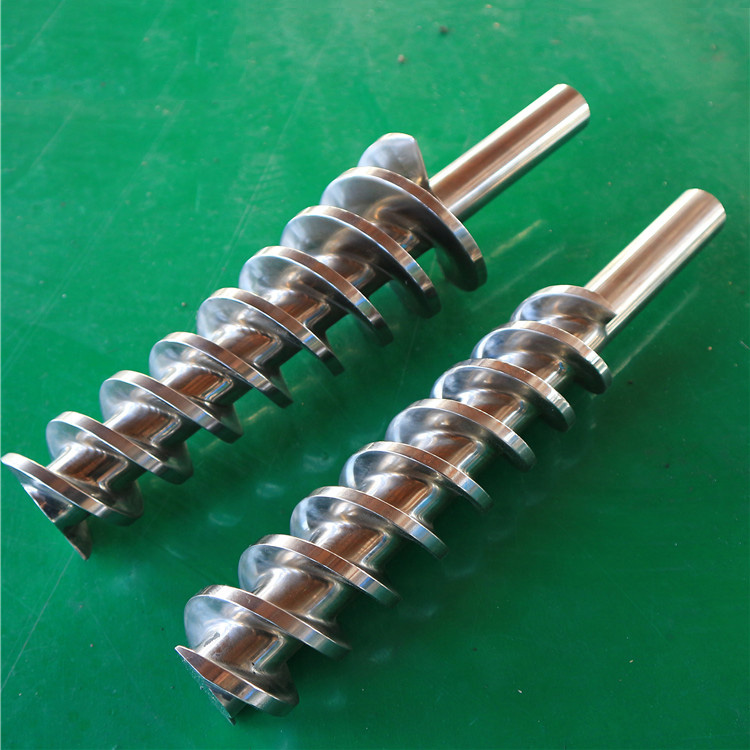
Cold-feed and hot-feed rubber screws differ because they receive compound in different conditions. A hot-feed screw handles rubber warmed upstream; a cold-feed screw must also work and warm the incoming stock. That changes the working length, channel geometry, mixing requirements and temperature-control arrangement. For a replacement, follow the installed machine's feed system and drawing before choosing a material upgrade. Matching the screw diameter alone does not establish that a screw-and-barrel set will fit or perform correctly.
1. What changes between cold feed and hot feed?
The distinction starts before the compound reaches the screw. Hot-feed rubber has already been warmed and worked in an upstream operation. Cold-feed stock enters near ambient temperature, so more of the warming and homogenizing task takes place inside the rubber extruder. Neither name describes a universal barrel temperature or a particular finished product. Schmidt and Schöppner's rubber-extrusion study explains this difference between the two feed concepts.
| Buying question | Hot-feed screw and barrel | Cold-feed screw and barrel |
|---|---|---|
| What enters the feed opening? | Compound prepared and warmed upstream | Ambient-temperature, pre-compounded stock |
| What must the screw accomplish? | Convey, homogenize and build pressure from that prepared feed | Take in the stock, work and warm it, homogenize it and build pressure |
| What length is listed on EJS's relevant product page? | L/D of 4:1 to 6:1 | L/D listed as 15D to 20D |
| What must a replacement preserve? | The actual feed, screw, barrel and connection geometry | Those interfaces, plus the installed mixing and temperature-control arrangements |
| What should identify the ordered part? | An approved drawing tied to the machine | An approved drawing tied to the machine, including any pin configuration |
The L/D entries above come from EJS's hot-feed rubber screw-and-barrel page and cold-feed product page. They describe the options published on those pages, not mandatory industry ranges or interchangeable standard sizes.
Cold feed also does not mean feeding an unmixed recipe and expecting the screw to replace every upstream compounding operation. Describe the supplied stock: its formulation, physical form and condition at the feed opening. A sheet of pre-compounded rubber, an irregular strip and a warmed feed stream are different specification inputs even when they share the same polymer name.
For wider background on product families, see the rubber screw-and-barrel buyer's guide. The narrower task here is to define the hardware that belongs on your machine.
2. Read the screw design beyond its L/D ratio
Rubber extrusion screw design needs more detail than a diameter and one ratio. Two screws can share an L/D value while differing in pitch, channel depth, core diameter, flight arrangement and mixing features. Record the profile along the working section rather than reducing it to a single label such as "cold-feed screw."
Working length and overall length are different dimensions
Use the drawing's defined working length when calculating L/D. Record the overall length separately, together with the drive shank, shoulders and tip details. A supplier needs both the processing geometry and the features that locate and drive the part.
For illustration only, assume a constant screw diameter of 60 mm and define L as the working length. At L/D = 5, L is 300 mm. At L/D = 18, L is 1,080 mm. These are arithmetic examples, not EJS model dimensions. They show how much information a ratio can hide; they do not prove either screw will fit a particular barrel or produce a specified output.
Feed condition changes the screw's task
Concept comparison. Specify the actual working profile and machine interfaces.
HOT FEED
Pre-warmed compound
Convey + homogenize + build pressure.
Upstream preparation is part of the feed condition.
COLD FEED
Ambient, pre-compounded stock
Take in + work and warm + homogenize.
Then deliver the compound against downstream resistance.
Working length is not overall length
Illustrative arithmetic only. Assume a constant diameter D = 60 mm, and define L as the working length.
L/D = 5
L = 5 × 60 = 300 mm
The orange segment represents the working length.
L/D = 18
L = 18 × 60 = 1,080 mm
The orange segment represents the working length.
The gray drive-shank symbol is separate and is not included in the working length.
Simplified illustration, not a product drawing. These ratios do not prove fit, output or interchangeability.
Describe the channels and the matching barrel
Supply the axial positions where the profile changes. Include flight pitch, core diameter, channel depth and relevant flight details on the drawing. If the old extruder screw is worn, distinguish measured remaining dimensions from the intended new-part dimensions. Copying wear into a replacement drawing preserves the wrong baseline.
EJS also lists separate pin-type rubber screw-and-barrel products. Do not assume every cold-feed design uses the same arrangement. TROESTER's rubber-extrusion product range likewise includes smooth and pin-type designs. Where pins are installed, the barrel positions and corresponding screw geometry need a matched definition. Removing them or substituting a plain screw requires a design review, not a change to the order description.

3. Temperature control belongs in the part specification
The phrase "cold-feed extrusion" identifies the incoming stock condition. It does not mean the compound stays cold. Mechanical working introduces heat, while the temperature-control system adds or removes heat through the hardware. Treat the feed temperature, controller setpoints and measured compound temperature as separate records.
That distinction matters when comparing an old extrusion screw with a proposed replacement. A controller display describes a controlled location or circuit. It does not, by itself, establish the temperature throughout the rubber at discharge. Avoid accepting a performance claim based only on identical controller settings.
TROESTER identifies water heating/cooling units in its GS rubber-cable extruder documentation. EJS's pin-type product description also discusses hot-water circulation. These examples show why temperature-control connections belong in the specification; they do not mean every screw and barrel has identical internal passages or water requirements.
| Item to record | Information needed for a replacement review |
|---|---|
| Stock at the feed opening | Physical form and measured inlet condition, including upstream warming |
| Barrel temperature control | Zone boundaries, circuit identification, connection positions and the approved operating requirements |
| Screw temperature control, if fitted | Internal passage arrangement, connection/rotary-union interface and the original drawing |
| Compound temperature | Measurement location, method and stable running condition |
| Thermal restriction | The compound's specified processing limits and supporting supplier or laboratory information |
Thermal uniformity and material uniformity are different questions. The Paderborn research evaluates them separately and discusses local heating and scorch. Its results support checking more than an average temperature; they do not supply a universal operating limit for EPDM, NBR or every SBR formulation.
For the ordered hardware, preserve the approved cooling layout unless a documented redesign changes it. Do not infer an internal passage from an external photograph. Temperature settings and safe operating limits should come from the actual compound and machine procedure, not a comparison article.
4. Is cold feed always faster or more energy-efficient?
A feed label is not a performance guarantee. Judge a screw-and-barrel proposal against qualified production from the actual compound and tooling. A higher output figure is useful only if the material remains within its processing limits and the product meets the same dimensional, surface and other acceptance requirements.
Start with the part of the process being compared. A hot-feed arrangement includes preparation upstream of the extruder. A cold-feed comparison that counts only the main drive is not directly comparable with a hot-feed total that also counts a warming mill, or vice versa. Similarly, drive nameplate power is a capacity rating, not a measurement of energy used per acceptable kilogram.
Use a common comparison record:
- The same compound identification, feed form and preparation history.
- The same product, die arrangement and agreed quality criteria.
- A stable running period, with screw speed, pressure and temperature records.
- Measured energy for an explicitly identified set of equipment.
- Accepted product mass, with rejected production recorded separately.
A practical energy measure is measured energy within the agreed boundary (kWh) divided by accepted product mass (kg). State whether the boundary includes upstream warming, the extruder and temperature-control auxiliaries. Compare like with like; do not quietly add or remove equipment between the two records. This is a comparison method, not an EJS energy-saving claim.
For replacement buyers, first establish whether the task is to restore a proven specification or change its processing behavior. Restoring worn geometry and redesigning a screw are different projects. The second needs an agreed trial basis and acceptance limits, not a promise attached to the words "cold feed."
5. Choose for the compound and the installed line
When specifying an extruder for rubber, begin with the feed condition and required processing task. When ordering its screw and barrel, add the installed machine's mechanical constraints. An application such as hose, profile or tire-component production is useful background, but does not uniquely identify the required hardware.
EJS's hot-feed and cold-feed product pages both list rubber-product applications. That overlap is a reason to send the actual compound and machine information rather than choose a screw from the finished product name alone.
| Your situation | Starting decision | Evidence to send |
|---|---|---|
| Replacing parts in a proven hot-feed arrangement | Retain the documented feed concept and interfaces unless an engineering review approves a change | Original drawing, upstream feed condition, wear record and replacement objective |
| Replacing a cold-feed screw and barrel | Identify the installed channel, mixing and temperature-control configuration | Working profile, barrel drawing, feed arrangement and compound record |
| Ordering for a pin-type barrel | Define the screw and barrel as matching components | Pin layout, corresponding screw features, section identity and approved clearances |
| Changing the compound or filler loading | Reopen the geometry and working-surface review | Old and new formulation information, processing limits and observed wear |
| Considering a change of feed concept | Review the entire set of affected interfaces and processing requirements | Machine capability information and an approved design proposal, not just a longer screw |
Material selection follows this definition of the job. Specify the base material and working surface for the screw and barrel separately, with the relevant compound and wear mechanism in view. A harder surface does not correct a mismatched feed opening or cooling connection. The screw-and-barrel materials guide explains that separate material review.
Keep uncertainty in the inquiry specific: an unidentified thread, a missing drawing revision or an unknown cooling passage can be investigated. "Suitable for rubber" is too broad to settle any of those questions.
6. Can hot-feed and cold-feed sets be interchanged?
Do not treat equal screw diameters as approval to interchange the sets. Working length is only one compatibility check. The drive connection, barrel mounting, feed opening and temperature-control layout must also agree with the installed machine. If the project changes the feed concept, the review extends beyond the parts being purchased.
The following checklist is a way to organize that review. It is not a substitute for the machine manufacturer's drawings or an approved installation procedure.
| Interface or feature | What to define | Why the record matters |
|---|---|---|
| Drive end | Shank dimensions, spline or keyway, shoulders, engagement and rotation convention | Defines how the part locates and receives torque |
| Barrel mounting | Pilot/register, flange, bolt pattern, datum and axial position | Relates the replacement to the machine structure |
| Working section | Diameter definition, working length, profile transitions and relevant clearances | Defines the processing pair rather than one outside dimension |
| Feed opening | Opening shape, position and relation to any feed roller | Preserves the installed feed arrangement |
| Temperature-control connections | Ports, circuit identity and screw connection where present | Prevents an assumed external match from hiding an internal difference |
| Pins, where fitted | Position, orientation, installed geometry and corresponding screw features | Records a matched arrangement, not merely a hole count |
| Discharge end | Tip, mating face, flange or other original connection details | Defines the connection to the downstream assembly |
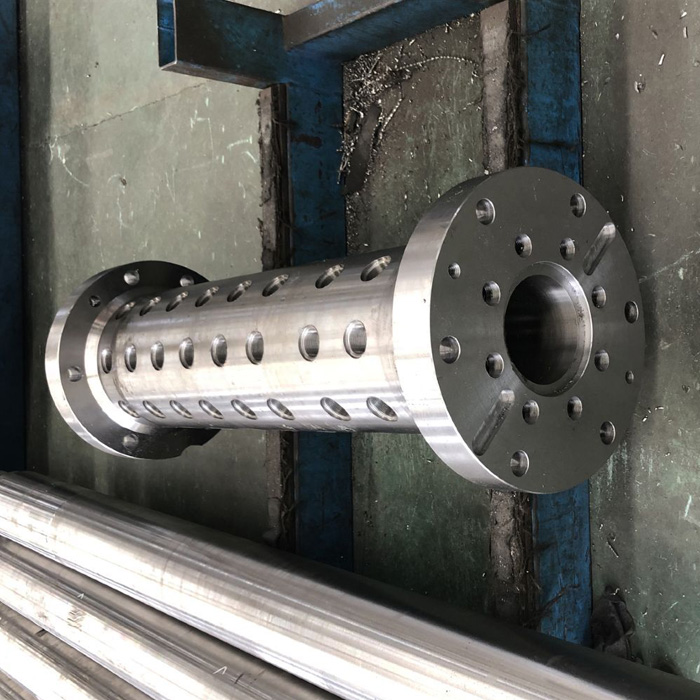
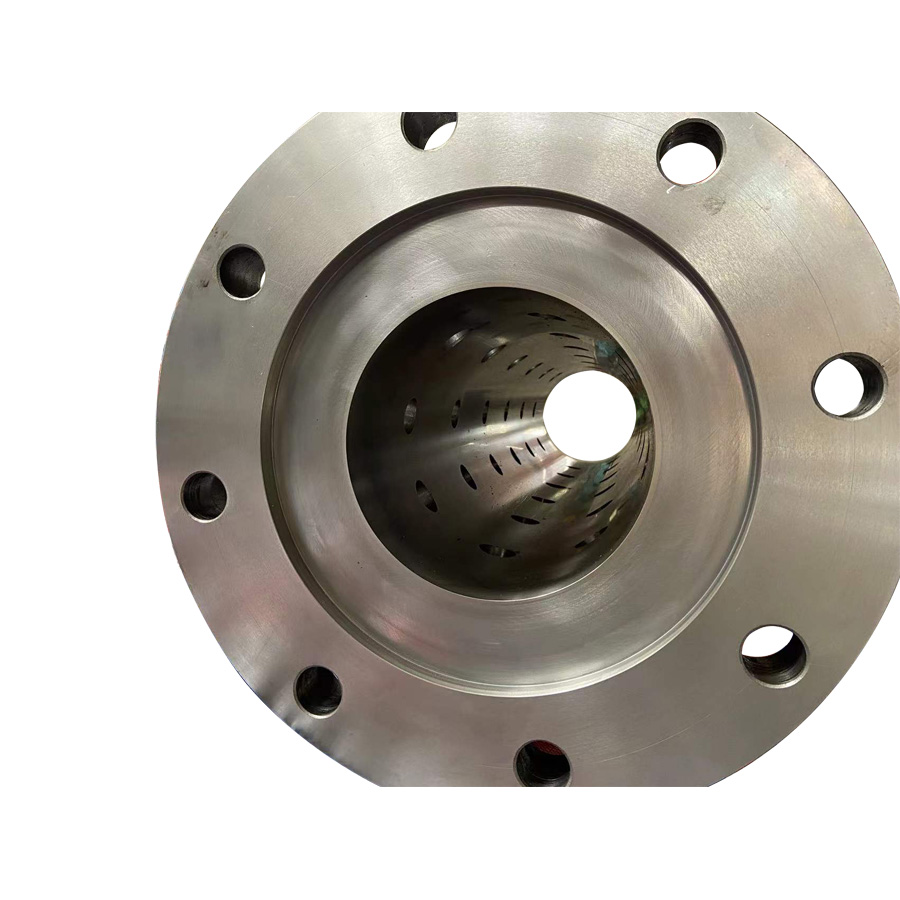
For a pin barrel, record each section and its orientation before assembling the specification pack. A photograph can help identify the arrangement, but it cannot confirm installed pin intrusion, the corresponding screw envelope or operating clearance. Ask for those definitions separately. The original approved geometry should control a repeat order; a visibly worn sample should not silently replace it.
7. The EJS factory perspective: define the pair before the material upgrade
For a replacement inquiry, we recommend identifying the original feed concept and matching interfaces before requesting a different steel or surface treatment. A photograph helps describe the part, and a product name helps route the inquiry. Neither replaces a dimensioned definition of the screw and its mating barrel.
Our recommendation is to put the design drawing and the condition of the old parts into separate records. The drawing defines the intended replacement. Measurements and photographs show what has happened to the old set. Where those records disagree, identify the location and drawing revision rather than asking the factory to reproduce an unexplained dimension.
EJS's rubber screw-and-barrel product information describes customization to customer drawings and provision of inspection reports and material certificates. For the specific order, agree which dimensions and material requirements those records need to demonstrate.
Prepare the inquiry in this order:
- Identify the machine and the actual hot-feed or cold-feed arrangement. Include the original part numbers and available drawing revisions.
- Supply screw and barrel drawings together. Define working length separately from overall length and show the drive, mounting, feed and discharge connections.
- Add the pin arrangement and temperature-control details where applicable. Mark unknown features instead of guessing their dimensions.
- Describe the compound, feed form, filler information and processing limits. State whether the formulation has changed since the original parts were selected.
- Attach the old-part condition record. Label measurement positions and distinguish worn readings from nominal design values.
- Define the objective and acceptance basis: repeat replacement or redesign, required dimensional inspection, material documentation and a trial assessed under agreed conditions.
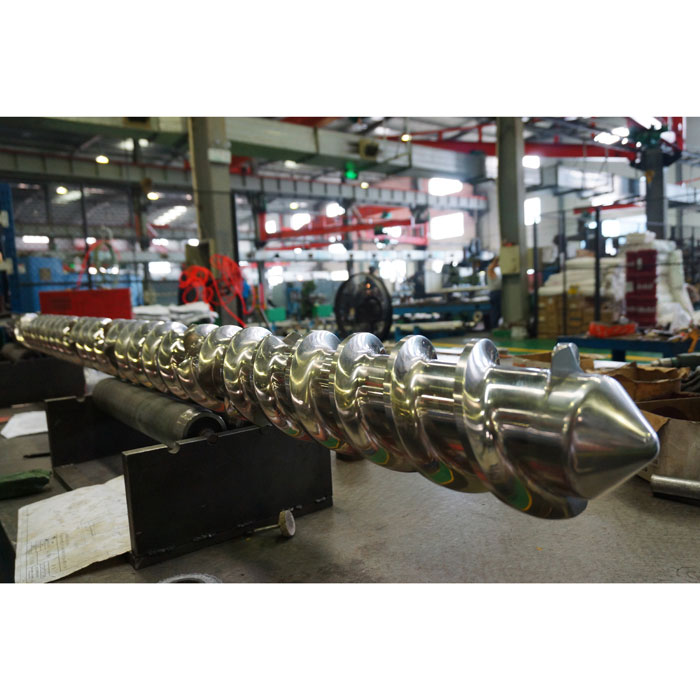
Send that package with your inquiry for an EJS cold-feed rubber screw and barrel or hot-feed assembly. It gives the manufacturer a defined part and operating task to review, rather than a request to choose from two generic labels.
8. Frequently asked questions
Does cold feed mean the rubber stays cold during extrusion?
No. It describes the stock entering the machine. The screw works and warms the compound, while temperature-control equipment manages heat transfer. Record the inlet condition, controller settings and measured compound temperature separately. The compound's approved processing limits still apply.
Does every cold-feed rubber screw require a pin barrel?
No. Smooth and pin-type rubber-extrusion configurations both exist. Identify the installed design before ordering. If pins are present, their positions and installed geometry need to match the corresponding screw features; a generic cold-feed description is not enough to establish that fit.
Is a longer L/D ratio always better for rubber processing?
No. L/D describes length relative to diameter, not overall suitability. The required task, channel profile, temperature control and machine interfaces also matter. The different L/D entries on EJS's hot-feed and cold-feed pages describe those product options, not an instruction to lengthen an existing screw.
Can a cold-feed screw replace a hot-feed screw of the same diameter?
Equal diameter alone is insufficient. Check the complete screw-and-barrel definition, drive and mounting interfaces, feed arrangement and temperature-control connections. Any proposed change of feed concept requires an engineering review of the affected system before a replacement or conversion can be approved.
What should a replacement inquiry include if the original drawing is missing?
Send the machine identification, part markings, labeled photographs, accessible dimensions, feed and cooling details, and the compound information. Separate confirmed measurements from unknown features and worn surfaces. The manufacturer can then identify what additional definition is needed; the sample should not automatically become the nominal new-part drawing.