- English
- 简体中文
- Español
- Português
- русский
- Français
- 日本語
- Deutsch
- tiếng Việt
- Italiano
- Nederlands
- ภาษาไทย
- Polski
- 한국어
- Svenska
- magyar
- Malay
- বাংলা ভাষার
- Dansk
- Suomi
- हिन्दी
- Pilipino
- Türkçe
- Gaeilge
- العربية
- Indonesia
- Norsk
- تمل
- český
- ελληνικά
- український
- Javanese
- فارسی
- தமிழ்
- తెలుగు
- नेपाली
- Burmese
- български
- ລາວ
- Latine
- Қазақша
- Euskal
- Azərbaycan
- Slovenský jazyk
- Македонски
- Lietuvos
- Eesti Keel
- Română
- Slovenski
- मराठी
- Srpski језик

Injection Moulding Screw Barrels: The Heart of Modern Plastics Manufacturing
In plastics processing, few components are as critical—and as frequently overlooked—as the injection moulding screw barrel. This precision-engineered assembly does more than just move material; it melts, mixes, and delivers the very foundation of every plastic part we use daily. As industries demand higher precision, faster cycles, and more sustainable operations, screw barrel technology is undergoing a quiet but significant evolution.
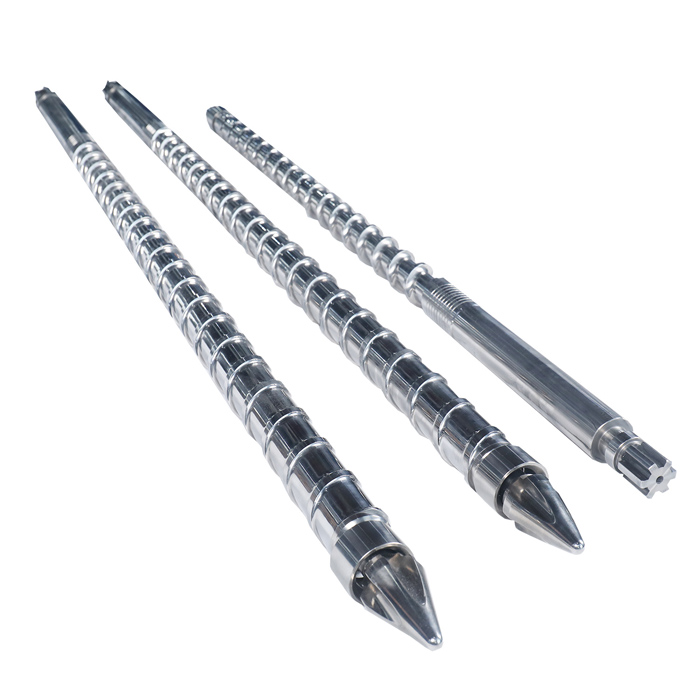
The Core Function of the Screw Barrel
Every injection moulding machine works on a simple principle: turn solid plastic pellets into a homogeneous molten fluid, then inject that fluid into a mould. The screw barrel makes this possible across three sequential phases—plasticating, accumulating, and injecting—while withstanding pressures up to 2,500 bar.
Simply put: if the screw barrel is the heart of the machine, its design determines the health of your entire operation.
Anyone who works in injection moulding knows this: the screw barrel is the "stomach" of the machine — feed plastic in, and whether it gets "digested" properly and comes out uniformly depends entirely on this component. A good screw barrel set keeps your machine running smoothly for years without major issues. But choose the wrong one or neglect maintenance, and you'll see defective products at best, or a complete production line shutdown at worst—and the loss isn't just the cost of replacement parts, but valuable lead time and customer trust.
Why Are Screw Barrels So "Delicate"?
Screw barrels operate under some of the most demanding conditions in manufacturing:
- High Temperatures: Barrel temperatures typically range from 150°C to 400°C, depending on the material being processed
- High Pressures: Injection pressures can reach 1,500–2,500 bar — comparable to the weight of a small car pressing down on a fingernail-sized area
- Severe Wear: Materials reinforced with glass fibre, mineral fillers, or flame retardants are highly abrasive on screw and barrel surfaces—like sandpaper constantly rubbing against metal
- Corrosion Risks: Materials like PVC and POM can release corrosive gases at high temperatures, causing chemical attack on the barrel's inner wall
Given these harsh working conditions, the screw barrel is one of the most frequently replaced and most selection-critical consumable parts on any injection moulding machine.
How Are Screw Barrels Manufactured?
A screw barrel may look simple, but its manufacturing process is highly sophisticated.
Screw Manufacturing
Screws are typically machined from nitrided steel or powder metallurgy high-speed steel, shaped through precision turning and milling, then hardened via nitriding or coating treatments to improve surface hardness and wear resistance. Higher-end screws are coated with tungsten carbide or chromium-nickel alloy coatings, achieving hardness up to HV 1200–1400 (Vickers hardness)—more than twice as hard as standard nitrided screws.
Barrel Manufacturing
The mainstream barrel technology is bimetallic centrifugal casting—a wear- and corrosion-resistant alloy layer (approximately 1.5–2.5mm thick) is centrifugally cast onto the inner wall of a standard steel tube. This layer can reach HRC 58–64 (Rockwell hardness), offering significantly longer service life than standard barrels. While more expensive, this type of barrel is essential when processing glass-filled or highly abrasive materials.
How to Choose the Right Screw Barrel? Three Golden Rules
Many buyers ask "which screw barrel is the best," but experienced technicians will tell you: there is no single best option—only the one that fits your needs. Follow these three practical rules:
Rule 1: Match the Screw to Your Material
|
Material Type |
Examples |
Recommended Screw |
|
General-purpose plastics |
PP, PE, PS |
Standard nitrided screw—cost-effective |
|
Engineering plastics |
ABS, PC, PA (nylon) |
Bimetallic or coated screw—must have good wear resistance |
|
Heat-sensitive materials |
PVC, POM |
Dedicated PVC screw—low compression ratio, low shear to prevent degradation |
|
Glass-fibre reinforced |
PA+GF, PP+GF |
Bimetallic screw + wear-resistant coating—non-negotiable |
|
Highly corrosive materials |
CPVC, flame-retardant grades |
Nickel-based alloy coating or full-alloy screw—corrosion resistance is top priority |
Rule 2: Match the Machine Parameters
Don't just look at the screw itself—make sure the injection capacity and length-to-diameter ratio (L/D) are compatible with your machine.
L/D Ratio: The ratio of screw effective length to diameter. Typical range is 18:1 to 25:1. Higher ratios improve plasticising quality for demanding materials, but also increase melt residence time and shear heat—heat-sensitive materials may degrade.
Compression Ratio: The volume change ratio across the feeding, compression, and metering zones of the screw. General-purpose plastics typically use 2.5:1 to 3.5:1; PVC and other heat-sensitive materials need lower compression ratios to reduce shear heating.
Practical tip: When in doubt, check your original machine manual or ask the equipment manufacturer directly—they know their machines best and can give you the most reliable matching advice.
Rule 3: Look at Total Cost, Not Just Purchase Price
Screw barrel sets range in price from a few thousand to tens of thousands of dollars. But experienced buyers look at cost per part produced. A cheaper screw that wears out in three months may actually cost more than a premium screw that lasts over a year—because downtime and labour for replacement often exceed the price difference.
Daily Maintenance: Five "Don'ts"
Even the best screw barrel will fail early without proper maintenance. Here are five practical tips from experienced technicians:
1. Don't start cold. Always preheat thoroughly before starting the machine. Once the set temperature is reached, hold it for 15–20 minutes to let the screw and barrel expand evenly. If you start with a cold machine, uneven thermal expansion can cause the screw to seize inside the barrel—and that means a full teardown.
2. Don't skip drying materials. Hygroscopic materials like PA and PET must be dried to their specified moisture content before processing. Moisture at high temperatures causes hydrolytic corrosion of the screw and barrel—you can't see it happening, but the damage accumulates over time.
3. Don't forget to check the non-return valve. The non-return valve (check ring) is the fastest-wearing part of the screw assembly. Check it regularly and replace it when worn. If it doesn't seal properly, material will leak back during injection, causing inconsistent shot weights and rising reject rates.
4. Don't let the screw run empty. If the hopper runs out of material, stop the machine immediately or refill it promptly. Running the screw empty inside the barrel means metal-on-metal contact—after just a few times, the screw and barrel are ruined.
5. Don't skip rust protection during shutdown. For extended downtime (e.g., holiday closures), always clean the barrel with a purging compound like PP or PE, then apply rust preventive oil before sealing. Otherwise, you'll find rust on the inner barrel wall at startup—and your products will come out full of black specks. It's just not worth the trouble.
When Is It Time to Replace Your Screw Barrel?
Watch for these warning signs—they indicate it's time to consider replacement:
Inconsistent part weights: Parts vary significantly in weight under the same settings and mould
Black specks or yellow streaks on parts: Material is degrading inside the barrel—often a sign of excessive shear heat from screw wear
Reduced throughput: Less material output at the same screw speed—means the screw is worn and less efficient
Injection pressure rising abnormally: Higher pressure needed to achieve the same injection speed—indicates barrel wear or increased screw clearance
If you spot any of these, schedule an inspection or replacement as soon as possible. Waiting until complete failure is far more expensive than replacing proactively.