Answer in brief:
An injection molding screw barrel does a job an extrusion screw never has to: it rotates to melt resin, then slides forward like a plunger to shoot the melt into a mold. That reciprocating action is why an injection screw carries a screw-tip assembly — screw tip, non-return valve, and check ring — at its front. When you spec one, the things that matter are the screw-tip components, the size class (EJS builds Ø16–Ø317 mm), and matching the alloy to your resin. Clean resin runs fine nitrided; abrasive or filled resin wants bimetallic.
1. How Injection Differs From Extrusion
Most of what gets written about screws and barrels assumes extrusion — a screw that turns at a steady speed and pushes melt out in a continuous stream. Injection molding works differently, and the difference changes what you buy.
An injection screw runs a cycle. First it rotates and retracts, melting resin and metering a measured charge of melt in front of the screw tip — the plasticizing phase. Then it stops rotating and rams forward, acting as a plunger to inject that charge into the mold. After the mold fills, it holds pressure while the part cools. Then the cycle repeats. So the same screw is doing two jobs: melting like an extruder, and injecting like a piston.
That has real consequences for the hardware. The screw slides back and forth inside the barrel, so the fit, the front-end seal, and the screw-tip components all matter in ways they simply don't for a continuous single-screw extruder barrel. And because each shot has to weigh the same as the last one, anything that lets melt slip backward over the flights during injection shows up directly as a defective part. That is the whole reason the non-return valve exists.
2. The Screw-Tip Assembly: Tip, Valve, and Ring
The front end of an injection screw is an assembly, not a single solid point. EJS produces all of these components, and a buyer ordering a replacement screw usually needs the matching set:
Screw tip
The pointed front piece that threads onto the screw. It shapes the melt flow into the barrel head and forms the front face that drives the shot forward. Tip geometry varies with resin — a free-flowing nylon and a heat-sensitive PVC don't want the same tip.
Non-return valve (check ring assembly)
This is the part that makes injection molding consistent. During plasticizing it opens to let melt flow forward, past the tip, into the space ahead of the screw. During injection it snaps shut so the melt can't flow back over the flights. The valve typically comprises a seat, a sliding check ring, and the tip that retains them. When it wears, you get the classic symptoms: shot weight drifting from cycle to cycle, short shots, loss of cushion. It's a wear part, and it's one of the most common reasons an injection front end comes in for service.
Nozzle, check ring, and end cap
The nozzle bridges the barrel to the mold sprue. The check ring is the sliding sealing element inside the non-return valve. The end cap (barrel head) closes the front of the barrel and seats the nozzle. EJS makes the screw tip, non-return valve, nozzle, check ring, and end cap as a complete accessory set, so a replacement front end arrives matched rather than mixed from different sources.
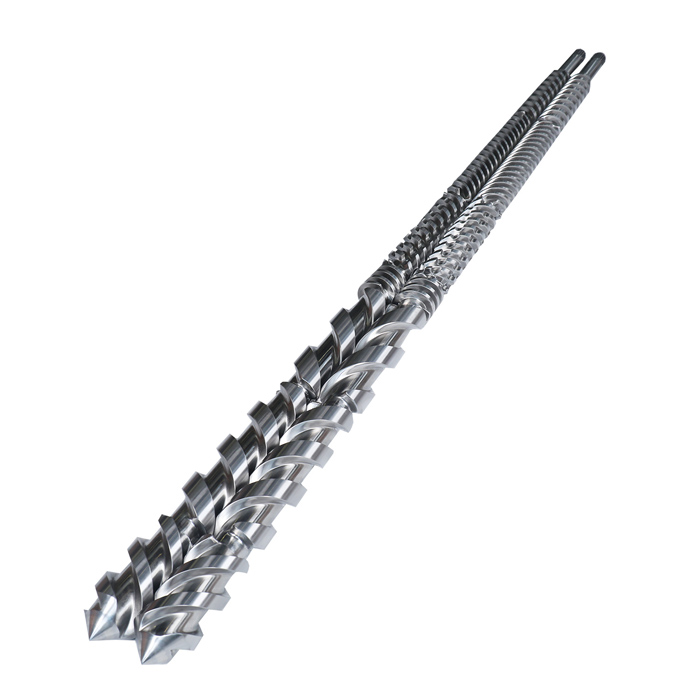
3. Sizes, Clamping Force, and Shot Weight
Injection screws and barrels are sized to the machine. EJS covers the range below, from small precision presses up to large-tonnage machines:
| Parameter | Range |
|---|---|
| Screw / bore diameter | Ø16 mm – Ø317 mm |
| Mold clamping force | 250 T – 3200 T |
| Injection (shot) capacity | 30 g – 25,000 g |
| Base steels | 38CrMoAlA (1.8509), 34CrAlNi7 (1.8550), 31CrMoV9 (1.8519), 40Cr, 42CrMo, SKD61, SS304 |
| Surface treatment | Bimetallic, nitriding, through-hardened, chrome-plated |
| Bimetallic layer (screw) | 1.0 – 1.5 mm |
| Bimetallic layer (barrel) | 2.0 – 3.0 mm |
| Nitriding layer | 0.4 – 0.7 mm |
The two numbers buyers cite most when ordering are the screw diameter and the machine's clamping force — together they place the part within this range. Shot weight matters too, because it ties to how much melt the screw has to meter per cycle. When you ask for a quote, having all three on hand makes the conversation fast.
4. Materials and Surface Treatment
The base steel gives the screw its strength and fatigue resistance; the surface treatment gives it wear and corrosion resistance. EJS works in 38CrMoAlA, 34CrAlNi7, 31CrMoV9, 40Cr, 42CrMo, SKD61, and SS304 depending on the duty, with four surface-treatment routes: bimetallic, nitriding, through-hardening, and hard chrome-plating.
The bimetallic-versus-nitrided decision works the same way it does on the extrusion side. Nitriding diffuses a hard case 0.4 to 0.7 mm deep into the steel — cost-effective and durable on clean, unfilled resin. Bimetallic adds a PTA-welded hardfacing layer (1.0 to 1.5 mm) on the screw and a centrifugally cast alloy liner (2.0 to 3.0 mm) in the barrel, which is what you want for glass-filled, mineral-filled, flame-retardant, or otherwise abrasive and corrosive resins. We go deep on the alloy choices — Ni60, Colmonoy 56, Colmonoy 83 for the screw, and the EJS01–EJS04 grades for the barrel — in the bimetallic vs nitrided guide.
One point specific to injection: the screw-tip components see the same melt and the same fillers as the screw flights. If the screw is bimetallic because you run 30% glass-filled nylon, a plain nitrided non-return valve will wear out ahead of the screw and undo the benefit. Match the front-end wear protection to the screw.
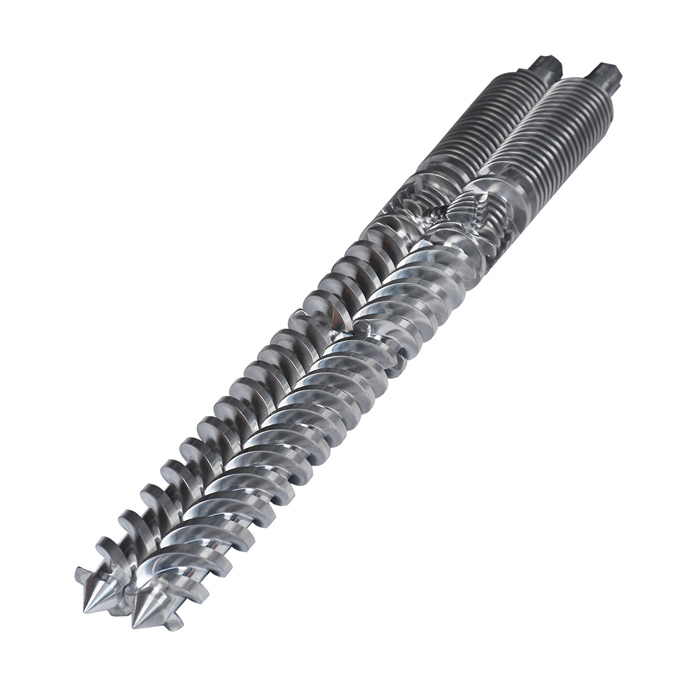
5. L/D Ratio and Three-Zone Screw Design
An injection screw is usually divided into three zones along its length: a feed zone that conveys solid pellets, a compression (transition) zone that melts and compacts them, and a metering zone that delivers a uniform melt to the front. The proportions of those zones, and the overall length-to-diameter (L/D) ratio, are tuned to the resin.
General-purpose injection screws often run around an L/D in the high teens to low twenties, with a moderate compression ratio. Heat-sensitive resins like rigid PVC want a gentler, lower-shear design; semi-crystalline resins like nylon or PP need enough metering length to fully melt. This is why "a screw is a screw" doesn't hold — a replacement built to the right zone layout for your resin plasticizes better and more consistently than a generic one. When EJS builds to a machine brand and code, the zone design comes with the geometry; when building to your spec, the resin tells us where to put the transition.
6. Choosing by Resin
Clean, unfilled commodity resins (PP, PE, PS, ABS)
A nitrided screw and barrel in 38CrMoAlA handles these well. No abrasive filler, no aggressive chemistry — the nitrided case lasts, and bimetallic would be paying for protection the resin doesn't demand.
Glass- and mineral-filled engineering resins
Glass-filled nylon, filled PBT, reinforced PP — these are abrasive, and they chew through a nitrided case. Bimetallic screw with a tungsten-carbide-bearing hardfacing (Colmonoy 83), a bimetallic barrel, and matching wear-protected screw-tip components is the durable answer.
PVC and flame-retardant grades
Here corrosion leads. Rigid PVC releases HCl as it degrades, and many flame-retardant packages are chemically aggressive. A corrosion-resistant barrel alloy and corrosion-strong screw hardfacing, often with chrome-plating on contact surfaces, is the route. Tip geometry should favor low shear to avoid overheating heat-sensitive PVC.
High-clarity and medical resins
Polycarbonate, PMMA, and medical grades reward clean, well-polished flow surfaces that don't trap or degrade material between shots. The screw-tip design and surface finish matter as much as bulk wear resistance here.
7. How to Spec a Replacement or New Build
Whether you're replacing a worn screw or sourcing for a new machine, the same information gets you an accurate recommendation and a fast quote from EJS:
- Machine make and model. EJS builds injection screws and barrels per drawing or per machine brand and code, so the model often pins down the geometry directly.
- Screw diameter and L/D ratio. The two numbers that place the part in the Ø16–Ø317 mm range.
- Clamping force and shot weight. Useful cross-checks — 250 T to 3200 T and 30 g to 25,000 g cover the EJS range.
- Resin and filler. Base polymer plus filler type and loading. This drives the alloy and surface treatment, and the screw-tip geometry.
- Which components you need. Screw only, full screw-tip assembly (tip, non-return valve, check ring), nozzle, end cap, or a complete screw-and-barrel set.
- Drawing if you have one. If not, product photos plus major dimensions — diameter, length, flange details — let EJS budget the price.
With that in hand, EJS issues a quotation within one working day. Screws and barrels carry a one-year warranty when running pure plastics. For vetting any China-based supplier before you commit, the buyer checklist walks through the checks that matter.
8. Frequently Asked Questions
How is an injection molding screw barrel different from an extrusion one?
An injection molding screw both rotates and slides back and forth inside the barrel. It plasticizes resin while moving back, then drives forward like a plunger to inject the shot into the mold. An extrusion screw only rotates and runs continuously. Because of that reciprocating action, an injection screw carries a screw-tip assembly — a screw tip, a non-return valve, and a check ring — that an extrusion screw does not have.
What is a non-return valve and why does it matter?
The non-return valve, sometimes called the check ring assembly, sits at the front of an injection screw. During plasticizing it lets melt pass forward ahead of the screw; during injection it seals so melt cannot flow back over the flights. A worn valve causes inconsistent shot weight, short shots, and cushion loss. It is a wear part and one of the most common reasons an injection screw front end gets serviced or replaced.
What size injection molding screw barrels can EJS make?
EJS produces injection molding screws and barrels from Ø16 mm to Ø317 mm, suited to machines with clamping force from roughly 250 to 3200 tons and shot weights from about 30 g to 25,000 g. All accessory parts are made too: screw tip, non-return valve, nozzle, check ring, and end cap. Screws and barrels are built per drawing or per machine brand and code.
Should an injection molding screw be bimetallic or nitrided?
For clean, unfilled resins a nitrided injection screw and barrel works well at lower cost. For glass-filled, mineral-filled, flame-retardant, or otherwise abrasive and corrosive resins, a bimetallic build with PTA-welded screw hardfacing and a centrifugally cast barrel liner lasts far longer. The screw-tip components see the same duty, so they should match the screw's wear protection.
Can EJS make a replacement injection screw for a specific machine brand?
Yes. EJS makes injection screws and barrels per drawing or per machine brand and code, and reverse-engineers existing geometry when no drawing exists. Provide the machine make and model, the screw diameter and L/D, and the resin you run, or send product photos plus major dimensions. EJS issues a quotation within one working day when the information is clear.
What causes an injection screw to wear out early?
The common causes are abrasive fillers like glass fiber cutting the flight lands, corrosive resins such as PVC or flame-retardant grades attacking the surface, and a worn non-return valve letting melt slip back. Symptoms include rising shot-to-shot variation, longer recovery time, and cushion loss. Matching the alloy and surface treatment to the resin is what prevents premature wear.