- English
- 简体中文
- Español
- Português
- русский
- Français
- 日本語
- Deutsch
- tiếng Việt
- Italiano
- Nederlands
- ภาษาไทย
- Polski
- 한국어
- Svenska
- magyar
- Malay
- বাংলা ভাষার
- Dansk
- Suomi
- हिन्दी
- Pilipino
- Türkçe
- Gaeilge
- العربية
- Indonesia
- Norsk
- تمل
- český
- ελληνικά
- український
- Javanese
- فارسی
- தமிழ்
- తెలుగు
- नेपाली
- Burmese
- български
- ລາວ
- Latine
- Қазақша
- Euskal
- Azərbaycan
- Slovenský jazyk
- Македонски
- Lietuvos
- Eesti Keel
- Română
- Slovenski
- मराठी
- Srpski језик

How to Choose the Right Extruder Screw Barrel for Maximum Efficiency?
The extruder screw barrel is one of the most critical components in plastic extrusion systems. It directly determines melting quality, mixing performance, output stability, and production cost efficiency. This article provides a comprehensive industry-level guide covering working principles, material selection, structural design, wear behavior, optimization strategies, maintenance methods, and troubleshooting techniques. It is designed for manufacturers, engineers, and procurement teams aiming to improve extrusion efficiency and reduce operational costs.
Table of Contents
- 1. What Is an Extruder Screw Barrel and Why It Matters
- 2. Working Principle of Extruder Screw Barrel Systems
- 3. Why Screw Barrel Quality Determines Production Efficiency
- 4. Types of Extruder Screw Barrels in Modern Industry
- 5. Screw Barrel Design Parameters Explained
- 6. Materials, Heat Treatment, and Surface Coating Technologies
- 7. How to Choose the Right Extruder Screw Barrel
- 8. Industry Applications and Use Cases
- 9. Common Problems and Failure Analysis
- 10. Maintenance Strategies for Longer Service Life
- 11. Performance Optimization Methods
- 12. Single Screw vs Twin Screw Barrel Comparison
- 13. FAQ
- 14. Conclusion & Contact
1. What Is an Extruder Screw Barrel and Why It Matters
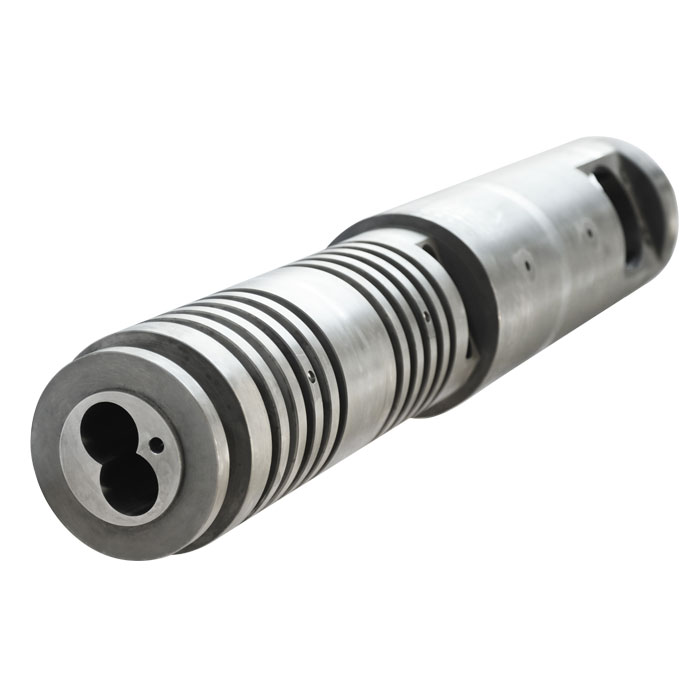
An extruder screw barrel is the core working assembly in plastic extrusion machinery. It consists of a rotating screw and a stationary barrel that together transport, melt, mix, and pressurize polymer materials.
In industrial production, this component directly influences:
- Product dimensional stability
- Surface finish quality
- Output rate and throughput
- Energy consumption efficiency
- Material degradation level
High-quality systems from manufacturers such as EJS extruder screw barrel ensure stable long-term operation and reduce maintenance costs significantly.
2. Working Principle of Extruder Screw Barrel Systems
The extrusion process inside a screw barrel is divided into three main stages:
- Feeding Zone: Raw polymer granules are introduced and transported forward.
- Compression Zone: Material is heated, compressed, and partially melted.
- Metering Zone: Fully molten polymer is homogenized and pushed to the die.
The screw rotation combined with barrel heating ensures controlled melting and consistent output pressure.
3. Why Screw Barrel Quality Determines Production Efficiency
Even small variations in screw barrel precision can lead to significant performance differences.
- Poor mixing leads to inconsistent product quality
- Uneven wear increases maintenance downtime
- Low-grade steel reduces lifespan dramatically
- Incorrect design increases energy consumption by up to 20–30%
Therefore, selecting a precision-engineered screw barrel is a strategic investment rather than a simple component purchase.
4. Types of Extruder Screw Barrels in Modern Industry
| Type | Description | Main Applications | Advantages |
|---|---|---|---|
| Single Screw Barrel | One rotating screw inside a cylindrical barrel | Pipe, sheet, film extrusion | Low cost, simple structure |
| Parallel Twin Screw Barrel | Two screws rotating in same direction | PVC, compounding | High mixing efficiency |
| Conical Twin Screw Barrel | Conical-shaped screw system | PVC pipe extrusion | High torque efficiency |
| Co-rotating Twin Screw Barrel | High-speed intermeshing screws | Engineering plastics | Excellent dispersion and blending |
5. Screw Barrel Design Parameters Explained
Engineering design plays a critical role in extrusion efficiency:
- L/D Ratio: Determines melting and mixing time
- Compression Ratio: Impacts pressure build-up and melting speed
- Flight Depth: Affects throughput capacity
- Clearance Gap: Controls leakage and efficiency loss
Precision machining is essential to maintain these parameters within strict tolerances.
6. Materials, Heat Treatment, and Surface Coating Technologies
Material selection determines wear resistance and service life.
- 38CrMoAlA: Standard nitriding steel for general use
- SKD61 / H13: High temperature resistance applications
- Bi-metallic barrel: High wear and corrosion resistance
Advanced coating technologies include:
- Nitriding treatment
- Hard chrome plating
- Laser cladding
- Carbide alloy lining
7. How to Choose the Right Extruder Screw Barrel
Selection should be based on real production conditions:
- Type of polymer (PVC, PE, PP, ABS, etc.)
- Production capacity requirements
- Processing temperature range
- Filler content and abrasiveness
- Expected lifespan and maintenance cycle
Working with experienced suppliers like EJS extruder screw barrel ensures proper technical matching and engineering support.
8. Industry Applications and Use Cases
- Plastic pipe extrusion systems
- Packaging film production
- Injection molding feed systems
- Compounding and masterbatch production
- Recycled plastic processing
Each application requires different screw geometry and wear resistance levels.
9. Common Problems and Failure Analysis
- Excessive wear: Caused by fillers like CaCO3 or glass fiber
- Material leakage: Due to clearance expansion
- Uneven melting: Incorrect screw design
- Overheating: Poor cooling system design
Early detection and proper diagnostics can significantly reduce downtime costs.
10. Maintenance Strategies for Longer Service Life
- Regular internal inspection of barrel wear
- Cleaning after production shutdown
- Monitoring temperature consistency
- Lubrication system checks
- Timely replacement of worn screw elements
11. Performance Optimization Methods
Efficiency can be improved through:
- Optimized screw geometry design
- Advanced cooling channel systems
- High precision machining tolerances
- Upgraded wear-resistant materials
12. Single Screw vs Twin Screw Barrel Comparison
| Feature | Single Screw | Twin Screw |
|---|---|---|
| Mixing Ability | Basic | Excellent |
| Cost | Lower | Higher |
| Output Stability | Medium | High |
| Maintenance | Simple | Complex |
13. Frequently Asked Questions
Q1: What is the lifespan of an extruder screw barrel?
Typically 2–5 years depending on material, wear conditions, and maintenance level.
Q2: Can screw barrels be repaired?
Yes, in many cases re-boring, re-lining, or re-coating can extend service life.
Q3: What causes screw barrel wear?
Main causes include abrasive fillers, improper temperature control, and poor lubrication.
Q4: How to improve extrusion efficiency?
Use optimized screw design, high-quality materials, and proper maintenance schedules.
Q5: Why choose professional manufacturers?
Because precision engineering and material selection directly affect production stability and cost efficiency.
14. Conclusion & Contact
The extruder screw barrel is not just a mechanical component—it is the core driver of extrusion efficiency, product quality, and production stability. Choosing the right design, material, and supplier can significantly improve long-term manufacturing performance and reduce operational costs.
For professional engineering support, customized screw barrel solutions, and high-performance extrusion components, visit EJS extruder screw barrel.
Looking to upgrade your extrusion performance?
Contact us today to get expert recommendations, technical consultation, and tailored solutions for your production line. We are ready to support your project from design to delivery. contact us for more details and cooperation opportunities.