- English
- 简体中文
- Español
- Português
- русский
- Français
- 日本語
- Deutsch
- tiếng Việt
- Italiano
- Nederlands
- ภาษาไทย
- Polski
- 한국어
- Svenska
- magyar
- Malay
- বাংলা ভাষার
- Dansk
- Suomi
- हिन्दी
- Pilipino
- Türkçe
- Gaeilge
- العربية
- Indonesia
- Norsk
- تمل
- český
- ελληνικά
- український
- Javanese
- فارسی
- தமிழ்
- తెలుగు
- नेपाली
- Burmese
- български
- ລາວ
- Latine
- Қазақша
- Euskal
- Azərbaycan
- Slovenský jazyk
- Македонски
- Lietuvos
- Eesti Keel
- Română
- Slovenski
- मराठी
- Srpski језик

Why Is the Parallel Twin Screw Extruder Reshaping High-Performance Polymer Processing?
A Parallel Twin Screw extruder has become a core technology in polymer compounding, masterbatch production, engineering plastics modification, recycling, and reactive extrusion. Its design—featuring two co-rotating screws arranged in parallel—creates a highly stable, high-torque, and energy-efficient processing environment. This configuration enables exceptional mixing performance, uniform melting, precise devolatilization, and consistent output, which are increasingly demanded across industries such as automotive, aerospace, medical devices, electrical components, and sustainable plastics processing.
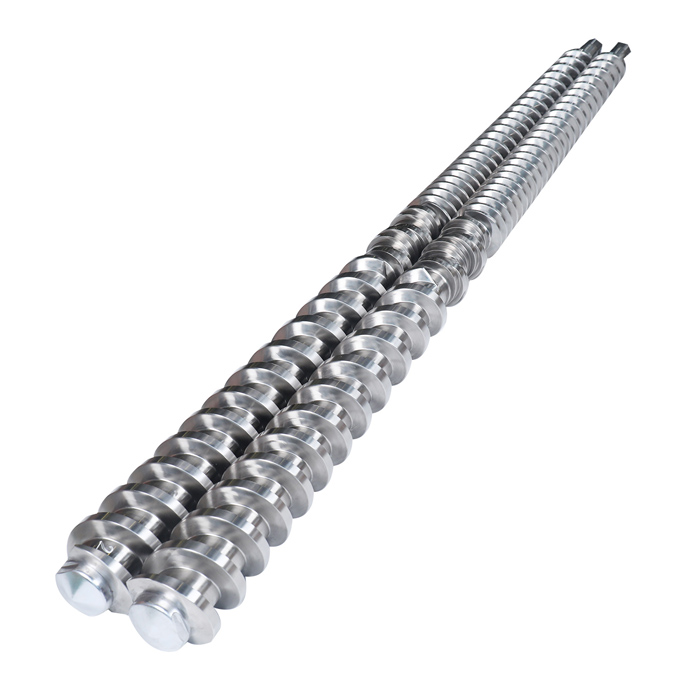
A professionally engineered Parallel Twin Screw extruder depends heavily on its technical configuration. Each parameter shapes the stability, capacity, and processing quality of diverse materials. Below is a representative specification table designed for high-performance industrial applications:
Parallel Twin Screw Key Parameters
| Parameter | Specification |
|---|---|
| Screw Diameter Range | 20 mm – 180 mm |
| L/D Ratio (Length–Diameter) | 28–68 L/D |
| Motor Power | 7.5 kW – 800 kW |
| Screw Speed | 300–1200 rpm |
| Material Output Capacity | 20 kg/h – 4,500 kg/h |
| Torque Density | 11–16 Nm/cm³ |
| Heating Zones | 6–14 independent zones |
| Temperature Control | ±1–2°C accuracy |
| Feeding System | Gravimetric or volumetric |
| Venting Options | Natural venting, vacuum venting |
| Drive System | High-torque gearbox with low noise |
| Barrel Material | Wear-resistant & corrosion-resistant steel |
| Screw Elements | Modular conveying, kneading, mixing, shearing |
How Do These Parameters Improve Production Results?
• High screw speed enables rapid melting and dispersion of fillers and additives.
• An extended L/D ratio supports multi-stage processing: feeding, melting, kneading, devolatilizing, and homogenizing.
• Modular screw elements fine-tune shear intensity, ideal for sensitive polymers or aggressive fillers.
• Precision temperature control safeguards materials from thermal degradation.
• Enhanced torque density ensures stable compounding even in high-viscosity or high-filler formulations.
• Independent heating zones create customized processing conditions for different polymers.
Functional Strengths Driving Market Adoption
-
Efficient Dispersive and Distributive Mixing
The parallel arrangement generates uniform shear forces, improving color masterbatch dispersion, filler distribution, and polymer blending quality. -
Stable Output for High-Filler Applications
Ideal for calcium carbonate, talc, carbon black, wood powder, and glass fiber reinforcement. -
Superior Devolatilization
Vacuum venting removes moisture, monomers, VOCs, and solvents, ensuring cleaner and more stable final products. -
Energy Efficiency
Optimized gearbox structure and screw geometry reduce energy consumption per kilogram of output. -
Modular Flexibility
Users can reconfigure screw sections based on project requirements without replacing the full assembly.
The Parallel Twin Screw extruder serves as a universal processing platform across sectors, but its popularity is particularly strong in the following domains:
1. Polymer Compounding
Used for blending base polymers with additives, stabilizers, flame retardants, impact modifiers, lubricants, and colorants.
How it helps:
• Ensures uniform additive dispersion
• Enhances mechanical properties
• Improves heat resistance and UV resistance
2. Engineering Plastics Modification
Applicable for PA, PC, ABS, PBT, PET, PPS, PEEK, and high-temperature polymers.
Benefit:
• High-torque transmission supports tough, high-viscosity resins
• Precise temperature control avoids polymer degradation
• Compatible with fiber reinforcement for structural components
3. Masterbatch Production
Black, white, color, filler, and additive masterbatch.
Benefit:
• Excellent mixing ensures consistent pigmentation
• Stable pelletizing yields uniform granules
4. Polymer Recycling and Upcycling Technologies
Recycling of PET, PP, PE, PS, ABS, and composite plastics.
Benefit:
• Vacuum venting removes moisture and contaminants
• Shear control enhances recycled polymer quality
• Supports reactive processing for material upgrading
5. Biodegradable and Bio-Based Materials
PLA, PBAT, PBS, starch blends.
Benefit:
• Gentle temperature control protects heat-sensitive biodegradable materials
• Modular kneading enables tailored mechanical behavior
6. Reactive Extrusion and Chemical Modification
Chain extension, grafting, polymerization.
Benefit:
• Long L/D ratio accommodates multi-stage reactions
• High mixing efficiency enhances reaction uniformity
Industry demands are shifting toward high-performance, high-precision, low-emission, and intelligent manufacturing. Several future trends will reshape the evolution of Parallel Twin Screw extruders:
1. Intelligent Automation and Real-Time Monitoring
AI-assisted process algorithms, smart sensors, and cloud analytics will optimize:
• Temperature profiles
• Screw speed
• Torque load
• Output consistency
• Material consumption and predictive maintenance
2. Higher Torque and Larger Throughput
Gearbox engineering innovations allow torque density to exceed current limits, enabling:
• Higher filler loading
• Larger output per hour
• More efficient mixing for tough polymers
3. Eco-Friendly Processing for Sustainable Materials
Driven by global sustainability goals:
• Renewable and biodegradable polymers
• Low-VOC compounding
• Energy-reduced processing
• Polymer circular recycling systems
4. Advanced Modular Screw Design
Future screws will incorporate:
• Low-shear segments for temperature-sensitive materials
• High-shear elements for fiber-reinforced compounds
• Custom kneading disks tailored to industry needs
5. Noise Reduction and Energy Optimization
Through:
• Improved gearbox geometry
• Low-friction bearings
• Digital load-balancing
Parallel Twin Screw — Common Questions
Q1: How does a Parallel Twin Screw differ from a Single Screw extruder?
A: A Parallel Twin Screw offers significantly superior mixing capability, more stable pressure, and better handling of high-filler or multi-component materials. Its co-rotating design reduces backflow, allowing precise melting and homogenizing. In contrast, a single screw is primarily used for simple melting and extrusion, offering limited mixing strength and less flexibility for complex formulations.
Q2: How does screw configuration affect material quality?
A: Screw configuration determines shear intensity, material residence time, mixing energy, and melting behavior. By arranging conveying, kneading, and mixing elements in strategic sequences, the extruder can optimize output for specific materials—whether the goal is high dispersion for masterbatches, gentle shear for bio-polymers, or robust mixing for engineered plastics. A well-designed configuration ensures consistent particle distribution, minimized thermal degradation, and stable mechanical properties.
Industries today demand higher efficiency, better material performance, and environmentally responsible production methods. A well-engineered Parallel Twin Screw extruder meets these needs through stable operation, high mixing efficiency, modular adaptability, and advanced control precision. With global markets shifting toward high-function polymers, recycled materials, and sustainable alternatives, the importance of reliable compounding equipment continues to rise.
EJS has developed a strong reputation for manufacturing durable, high-precision screw and barrel systems compatible with Parallel Twin Screw extruders. Its engineering expertise, materials technology, and customization capabilities support customers in achieving competitive performance in compounding, masterbatch production, engineering plastics, and recycling operations. To learn more about tailored solutions or request project guidance, contact us and explore how EJS can support your extrusion system requirements.